Monorepo Tooling Comparison for Fast-Moving Teams
Pick the right tier for your team's complexity, not your favorite tool's reputation.

Most monorepo tooling mistakes aren't about picking the wrong tool. If a ten-person startup reaches for Bazel because Google uses it, that's the same mistake a 200-engineer polyglot org makes when it tries to stretch Turborepo past what it was built for.
The debate itself has settled. Turborepo is the default for most JS/TS teams. Nx has carved out the niche for larger JS/TS monorepos, where the dependency graph is genuinely complex. Bazel remains the right call at true polyglot scale. Teams still reach for the wrong tier anyway, usually because they make the choice on reputation rather than on where the team actually sits on the complexity curve.
The costs run in both directions. Under-tool a 200-package polyglot repo with Turborepo and the team outgrows it within a year. If you over-tool a 20-package JS shop with Bazel, months disappear into build infrastructure that should have gone into product. The rest of this piece works through the criteria that actually decide this at startup speed: setup cost measured in days, CI wall-clock time, remote caching economics, and the point where each tool stops helping and starts fighting back.
What a monorepo buys a fast-moving team
A monorepo earns its keep through three mechanics. With atomic cross-project changes, one pull request can update an API contract, the TypeScript types it exports, and every consuming frontend at the same time. Shared tooling, one ESLint config and one TypeScript config for the whole org, ends the configuration sprawl that comes with maintaining dozens of separate repos.
Workspace protocols make the first of these concrete. Unified CI/CD compounds the advantage: one pipeline that understands how projects depend on each other beats a stack of per-repo pipelines that are blind to what happens outside their own boundaries.
None of this comes free. If the build tooling doesn't understand the dependency graph, a monorepo starts to hurt as soon as it grows past a trivial size. Every CI run rebuilds and retests the entire repo unless something is computing what actually changed. Neither advantage disappears just because monorepos are the current fashion.
The mismatch hits fast-moving startups hardest, where hiring velocity and engineering org composition shift month to month. Fonzi, which tracks engineering org composition across high-growth startups, has observed this pattern consistently: the decision gets made under uncertainty, and the team lives with the consequences for years.
How Turborepo, Nx, and Bazel each solve the core problem (and what they leave out)
All three tools exist to answer the same question: don't rebuild or retest anything that hasn't changed. Where they diverge is scope, language support, and how much complexity a team has to absorb to get the benefit.
Turborepo, built by Vercel, keeps configuration in a single turbo.json at the project root, with the option for individual packages to extend or override that root configuration with their own file. Independent tasks parallelize automatically across available CPU cores, and it integrates natively with npm, pnpm, Yarn, Bun, nub, and aube workspaces. Polyglot support is thin, there's no "affected" command as precise as Nx's, and it isn't built for monorepos with thousands of targets that need structured graph management.
Nx, from Nrwl (also known as Narwhal Technologies), builds a precise dependency graph of the whole workspace, and its nx affected command runs only the tasks tied to projects a given change actually touches, a feature that gets more valuable as the package count climbs. Polyglot support exists through community plugins, but it's secondary to a design that's JS/TS-first.
Bazel, from Google, brings true polyglot support, treating Java, Go, C++, Python, Rust, and JS all as first-class citizens inside a single build graph. Its hermetic builds are a hard correctness guarantee: a build that passes on one machine reproduces identically on another, a guarantee Nx and Turborepo don't make to the same degree. Targets are defined in BUILD files written in Starlark, configuration lives in a WORKSPACE file, and it supports remote execution on top of remote caching, the full distributed build model. It scales to tens of thousands of build targets, which is what it was designed for. For smaller teams the costs are steep: the steepest learning curve of the three by a wide margin, a migration that runs multiple quarters rather than a weekend, and a complexity budget that's wasted on teams that aren't genuinely polyglot at scale.
A few other tools round out the field. Lerna, now maintained by the Nx team, is a JS-only task runner with native distributed caching and distributed task execution, suited to simpler JS monorepos. Lage, from Microsoft, handles local orchestration and distributed computation caching but has no distributed task execution, no polyglot support, and no AI skill support. Gradle, from Gradle Inc., is a polyglot build system with native local caching and affected-project detection, but requires a custom implementation for distributed task execution and offers no hermetic builds.
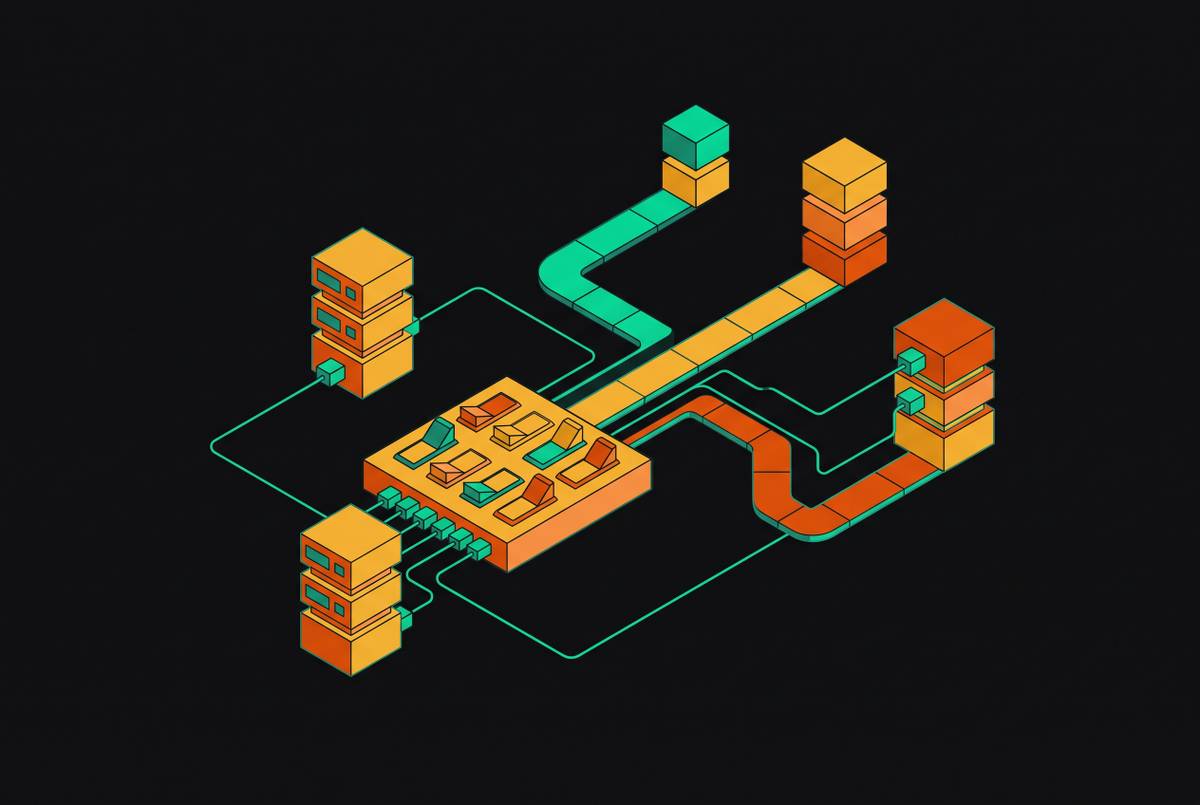
Laid side by side, the three primary tools occupy three distinct tiers: Turborepo for simplicity, Nx for richness, Bazel for scale. The decision that follows is about which tier matches the team.
Setup cost and time-to-value: what the first two weeks look like with each tool
Setup cost is the first real filter for a startup. A tool that takes a quarter to adopt correctly is a product bet, not a neutral infrastructure choice, and most early-stage teams make that bet without pricing it out in advance.
Turborepo drops into an existing pnpm or Yarn workspace in an afternoon. There's no BUILD DSL to learn, no project graph to maintain, and no test-runner migration: the mental model maps directly onto what the team already knows from its package manager. That bounded scope matters. It's a template for a team in a similar position, not a promise that every cutover compresses to a weekend.
Nx scaffolds faster than Bazel out of the gate. create-nx-workspace generates a working repo with applications and libraries in minutes. Nx Cloud's distributed task execution is mature, and you get it on the free Hobby plan under a credit-based usage limit, with paid plans for larger teams; if you want to self-host the remote cache instead, you can, but then you maintain the infrastructure yourself.
Bazel is the outlier. Migrating an existing codebase is a substantial project: BUILD files have to be written per target, Starlark has to be learned, and the hermetic build model requires every external dependency be declared explicitly. People often cite one well-documented real-world account of a large-scale JVM monorepo migration to Bazel, because it documents the cost honestly. The rule of thumb that falls out of this is that if a team can't absorb a multi-quarter platform project without slowing product delivery, Bazel isn't available to it today, regardless of where that team expects to be in a few years.
CI wall-clock time and remote caching economics across the three tools
CI wall-clock time isn't fixed by the tool alone. It depends on how much work the tool can skip, how well it distributes what's left, and whether the remote cache is warm when the build runs. It changes what a benchmark is actually measuring.
On a single CI runner, Nx completes builds faster than Turborepo, and the gap widens substantially once Nx's distributed task execution (Nx Agents) is active against Turborepo's manually configured parallelism. For a team running a handful of CI agents, that automatic distribution is a real operational advantage, but it only pays off once the team has enough scale to justify the added complexity of running Nx Cloud.
For the polyglot heavyweights, Bazel, Buck2, and Pants, the remote cache produces large reductions in CI time on incremental and cached runs. The economics are back-loaded: the team pays a higher cost on cache-cold runs, meaning new branches and the first run after a large change, and recoups that cost on the warm runs that make up the bulk of a mature CI pipeline.
Pricing structure differs across the three in ways that matter at different team sizes. Turborepo's remote cache is free on every Vercel plan, whether you're on Hobby, Pro, or Enterprise. Nx's free tier includes a meaningful monthly allocation, with the Pro tier priced at a flat $249 a month covering up to 30 contributors. Bazel is open source, but remote caching needs self-hosted infrastructure or a third-party provider: the tool costs nothing, the infrastructure does. Bazel's infrastructure cost stays opaque until a team actually prices out the compute it needs.
The point at which each tool starts fighting you instead of helping you
Every monorepo tool has an upper bound, a point where its original design assumptions stop holding. Spotting that ceiling before hitting it is what separates a smooth migration from an emergency rewrite of the build infrastructure.
Turborepo's minimalism is a feature at small scale and a liability past it. The clearest signal the ceiling is close: developers spending real time on tasks Turborepo can't automate, scaffolding packages by hand, tracing dependency impact manually, wiring a non-JS tool into the pipeline themselves.
At that point the tool has become a product of its own, worth questioning whether a simpler tool would have avoided that headcount.
Bazel's ceiling is really a floor. Minimum viable adoption requires learning Starlark, writing BUILD files per target, and configuring the hermetic build environment, a cost a ten-engineer startup can't amortize across enough scale to justify. Bazel earns its complexity when a team is genuinely polyglot today, meaning active Java, Go, and TypeScript services sharing code in the same repo rather than a language the team might add someday, when build correctness guarantees matter more than fast developer onboarding, and when there's budget for dedicated build infrastructure.
A counterargument circulates that deserves a fair hearing: that monorepos at large team size increase CI duration, multiply merge conflicts, and add meaningful annual infrastructure cost per 100 engineers, and that a 72-engineer team that migrated out of a Turborepo monorepo saw CI duration and merge conflict frequency drop substantially. The pattern is real for teams that adopted a monorepo without the tooling discipline to manage it as it grew. It isn't an argument against the tools covered here. The tools in this piece exist specifically to prevent that failure mode: architecture and tooling have to be adopted together.
AI agents and monorepos in 2026: why the architecture choice now affects what your coding tools can do
Monorepo architecture has turned into a genuine multiplier for AI coding agents. An agent that can read frontend code, backend code, and shared libraries together can deduce patterns, apply conventions consistently, and open a single pull request that touches dozens of projects at once, capabilities that fragment the moment the code is split across separate repos.
Nx has made the most explicit investment in this direction. In February 2026, Nx shipped agent skills: portable capabilities that teach AI coding assistants how to navigate, build, and generate code inside the monorepo, including workspace structure and team naming conventions an agent wouldn't otherwise pick up on its own. On the monorepo.tools feature matrix, Nx supports a native MCP server, native AI skills, native workspace analysis, native task execution via AI, and native agentic CI, the most complete AI support profile of the three primary tools.
The rest of the field is further behind. Moon, the younger tool, carries a meaningful AI support profile of its own: native MCP server, community AI skills, native workspace analysis, native task execution via AI.
If your engineers already use AI coding assistants daily, and most fast-moving teams do in 2026, you can't file this away as a future consideration. It's a productivity variable the tool choice affects right now.
Matching tool to team stage: the actual decision for the next 18 months
The right tool is the one whose complexity ceiling sits just above where the team will be in 18 months: high enough that a migration isn't forced, low enough that it doesn't require a dedicated platform engineer just to keep running.
Start with Turborepo if the stack is JS/TS and will stay that way for the foreseeable future, the team sits under roughly 50 packages and doesn't yet need code generators or a visual dependency graph to operate safely, time-to-value matters more than feature completeness because CI savings are needed this sprint rather than next quarter, and the team already deploys on Vercel and wants the remote cache working without extra infrastructure decisions. Turborepo's minimalism is the correct tool for this profile, and reaching for Nx instead just adds complexity the team doesn't need yet.
Consider Moon if the team wants polyglot support and built-in toolchain management without Bazel's configuration overhead, or if it wants strong native AI task execution in a younger, faster-moving tool. Moon's feature set, native polyglot support, local and remote caching, project graph visualization, code generation, project constraints, workspace analysis, a native MCP server, and native task execution via AI, is positioned between Turborepo's simplicity and Nx's richness for teams whose stack doesn't map neatly onto the JS/TS-first tools.
None of this is a permanent commitment made in a vacuum. A monorepo's gains, atomic cross-project changes and unified CI/CD, matter most to teams moving at startup speed, because coordinated deploys across separate repos slow iteration down there. The tooling choice that follows deserves the same weight, because the engineers you hire next will inherit it. Turborepo to Nx is a real, well-trodden upgrade path for JS/TS teams, not a sign that the first choice failed. These tools are stages on a maturity curve, not competing philosophies demanding permanent loyalty, and a growing team will move through them naturally as it grows into them.