How Cursor Structures Its Engineering Deployment Pipeline
Three layers let a 50-person team ship agent-first, but review remains the bottleneck.
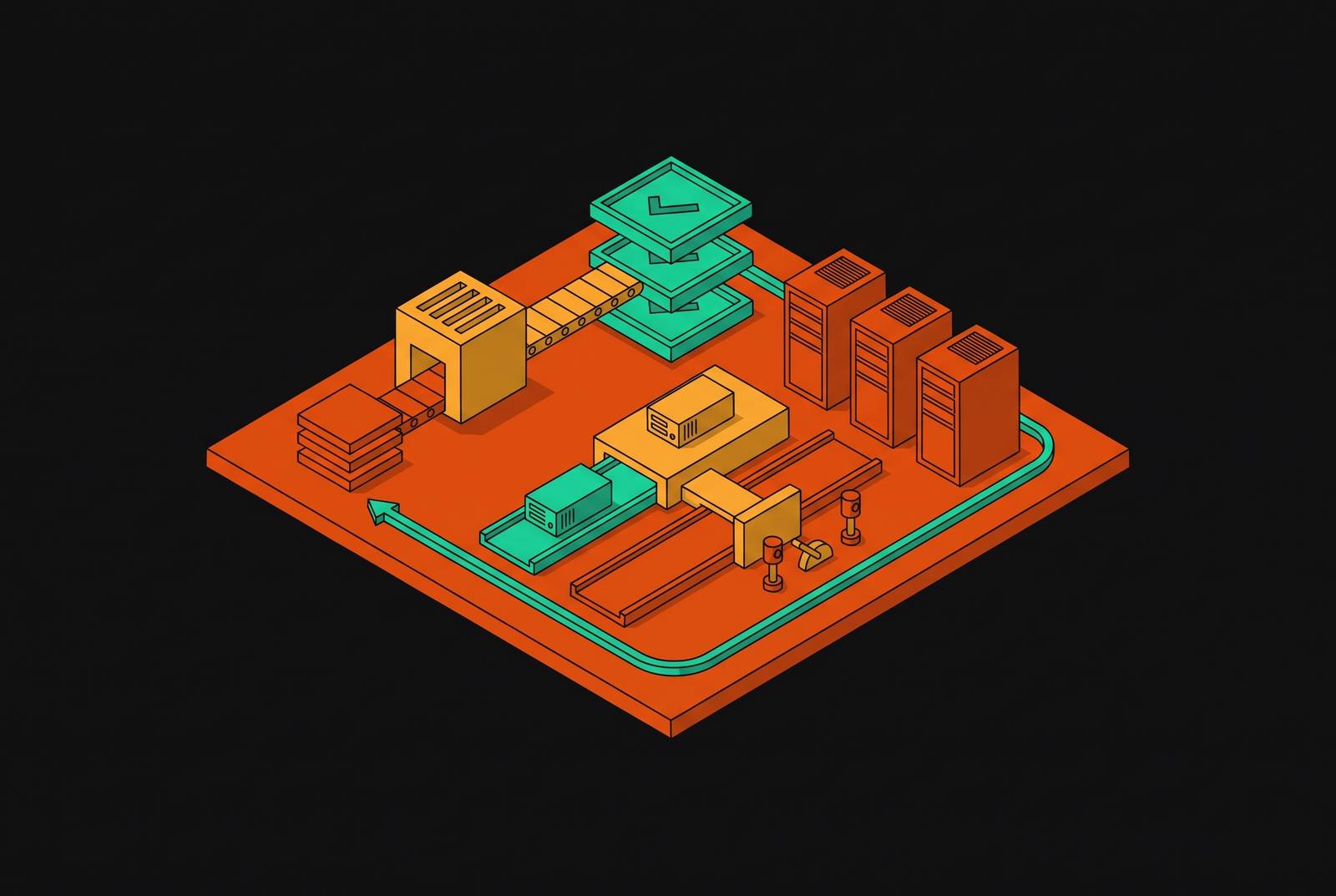
Cursor’s engineering deployment pipeline is best understood as three interlocking layers. The interactive layer supports the developer, the agent layer runs autonomous work, and the control layer governs it. These layers help a roughly 50-engineer team do more agent-first delivery without the overhead of microservices. They also expose the remaining constraint. Producing code is easier than establishing that it deserves to ship.
Why Cursor's deployment pipeline is worth understanding as an architecture, not a feature set
How does a 50-person team keep shipping without losing the gains to the work of keeping everyone in sync? That question makes Cursor worth studying as an engineering organization. Its product surface spans live editing, unattended execution, and code review, but those capabilities do not all belong in the same execution environment. Their boundaries do the important work. These boundaries help explain how the system grows and where producing more code puts it under strain.
Feature-by-feature descriptions obscure that logic because they treat completion, cloud agents, and review as separate conveniences. In practice, each changes what the next part of the pipeline must handle. More autonomous execution means more generated changes to govern. The architecture has to connect those responsibilities without forcing a small engineering team to operate a sprawling collection of services.
The monolith at the center and why it is a deliberate scaling choice, not a legacy liability
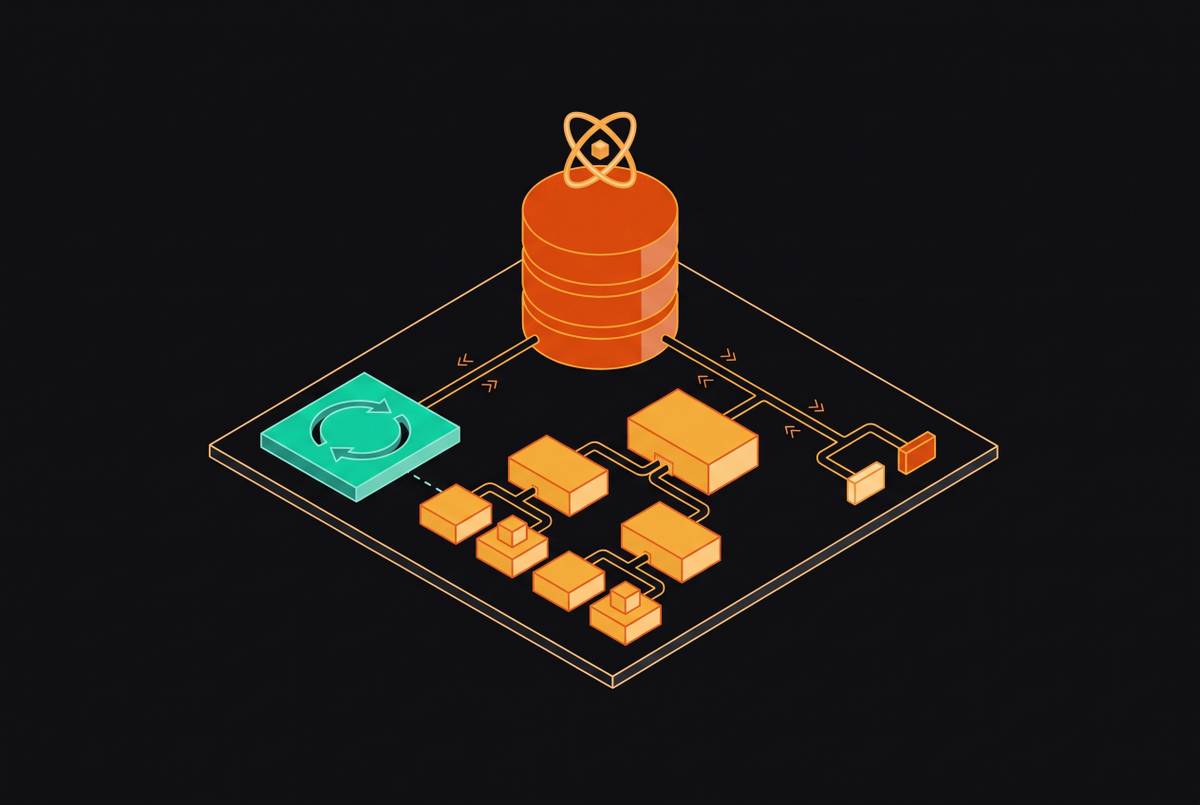
Cursor chose a TypeScript monolith for its API server and business logic, with performance-critical work handled in Rust through a Node.js bridge. The choice favors deployment simplicity over theoretical scalability headroom. It is a deliberate operating constraint. A small team can own what it deploys without the extra work of keeping business logic in sync across services.
The throughput supports that decision. The monolith has scaled to over 1 million QPS, so the objection that this architecture cannot handle substantial traffic is already too broad. That does not make every workload identical. Cursor’s Rust orchestration service, Anyrun, launches isolated agent VMs, while specialized infrastructure handles other jobs, including Turbopuffer for embeddings and workspace Merkle trees and Warpstream for the event data pipeline.
The same preference for ownership explains the VS Code fork. Controlling the rendering pipeline gives Cursor control over inline ghost text, the undo stack around AI edits, cross-file diff application, and the file system watcher beyond what the extension layer allows. Cursor 3, shipped April 2, 2026, added the Agents Window, a second native interface built from scratch. The interface changed without abandoning the backend foundation. That shared substrate lets the three layers develop as parts of one system.
The interactive layer and how the editor handles work while a developer is present
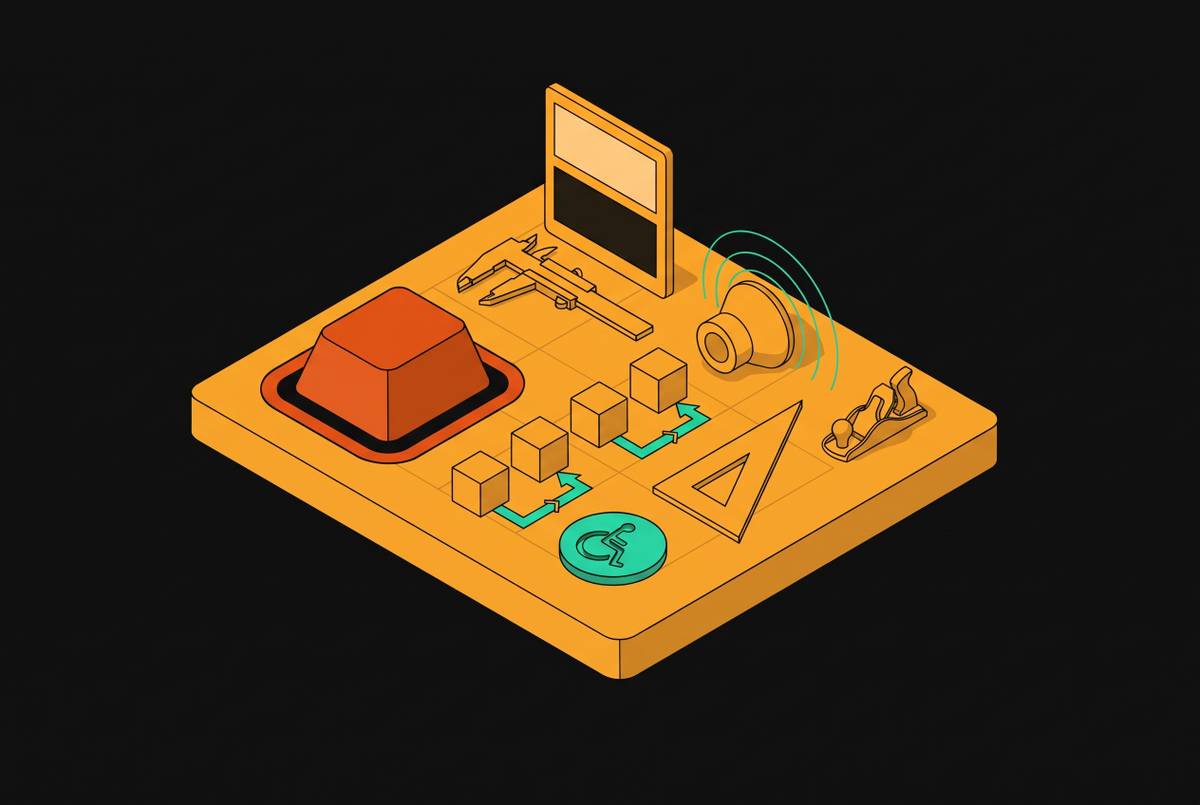
The interactive layer handles work while the developer is actively driving. Its core capabilities include Tab ghost-text completion, Inline Edit, chat with codebase context through semantic search, and @-references including @folders. The scope is deliberately narrow. These tools let a person give context, check suggestions, and change code without leaving the editor.
Memories, introduced in version 1.0 in June 2025, keep facts from conversations and use them in later sessions so people have less need to explain project context and conventions again. Custom slash commands encode reusable prompts in .cursor/commands/*.md files. Teams can therefore make common interactive workflows repeatable. Neither mechanism removes the developer from the loop, which is the boundary that separates this layer from autonomous execution.
Once work becomes multi-file, asynchronous, or longer-running than a single session, the agent layer takes over. An editor interaction can depend on a person being present, while an unattended task needs an execution environment that does not depend on that person’s session.
The agent layer and why autonomous work needs isolated execution
Cursor supports up to 8 parallel local agents, each in its own isolated git worktree. Cloud Agents can run as many as needed in parallel, each in its own isolated VM. Isolation belongs to each agent individually. It is not a shared boundary drawn around an entire team or project.
The worktree arrangement makes the design concrete. Parallel local agents get separate working copies for their edits. That separation gives concurrent work an explicit place to happen. It separates execution concerns from review concerns, while the compatibility and correctness of the resulting changes remain unproven.
Cloud Agents extend that boundary beyond the developer’s machine. Available on the Pro plan and above, they run in sandboxed VMs in Anysphere’s cloud infrastructure and can execute CI/CD pipelines, run full test suites, and generate preview deployments. Each SDK cloud agent receives a repository clone and a configured development environment. The editor does not have to remain open. Execution continues if the initiating machine goes offline, and teams can reconnect and stream the conversation from where it left off.
Isolation also leaves room for controlled cooperation. A main agent can delegate subtasks to named subagents with their own prompts and models, while hooks provide logging, guardrails, and custom orchestration. These mechanisms avoid requiring teams to rewrite the agent itself. For organizations with strict security needs, self-hosted workers keep code and the work of running it inside the organization’s network.
The control layer and how policies, routing, and BugBot govern agents
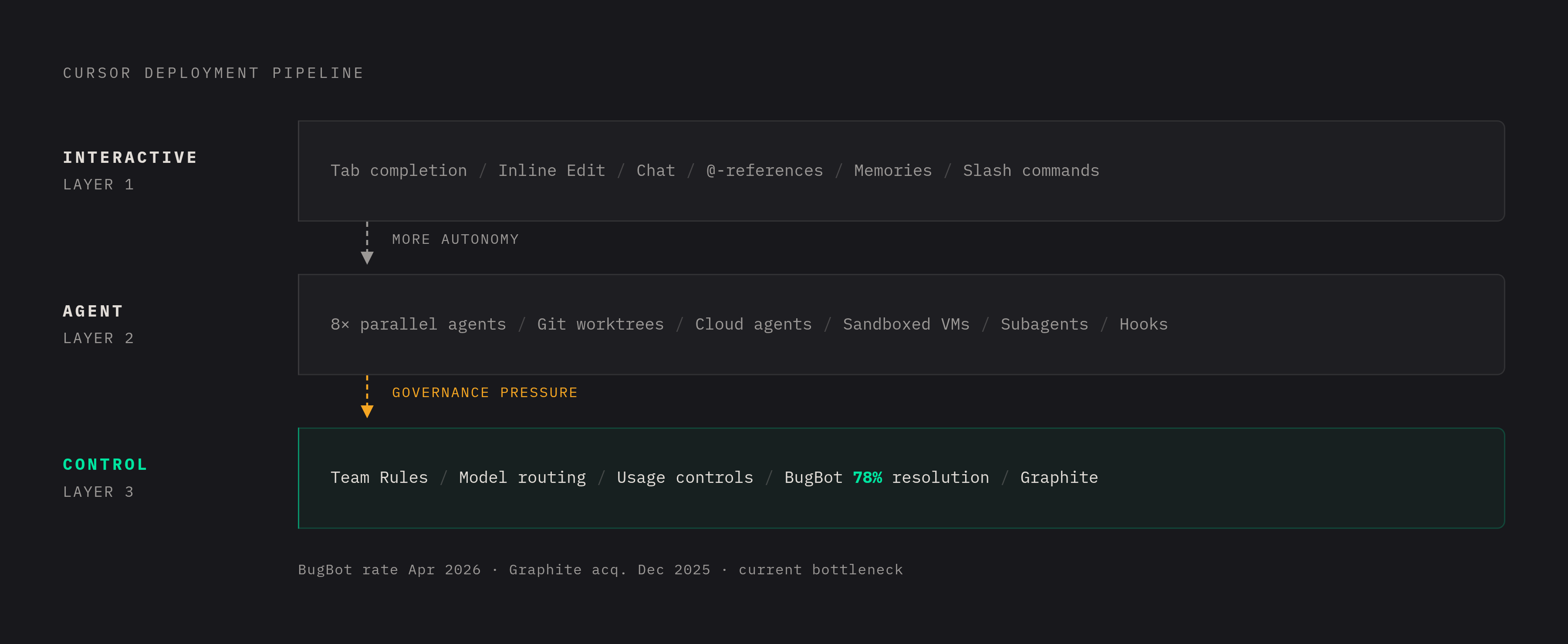
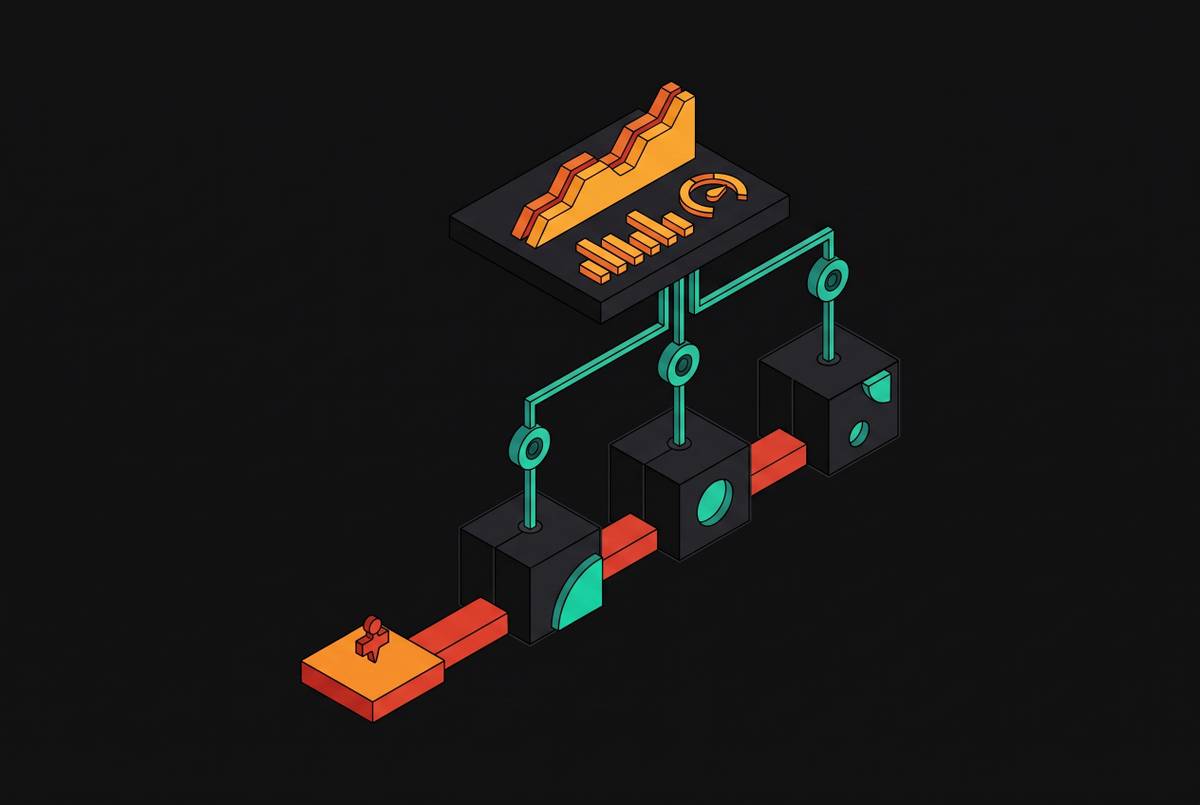
An isolated agent can still do unwanted work. The control layer defines what the organization permits, using Team Rules, model routing, usage controls, review, and runtime hooks. Team Rules, introduced in version 1.7, set policies for all projects, including rules for BugBot.
Model selection is part of that governance. The SDK exposes Cursor’s supported models, and changing models requires a single configuration field change. Cost, capability, and latency choices can therefore become policy. Usage limits and Business plan controls add cost constraints. Hooks can also log agent actions, enforce runtime policies, or block operations before they reach the filesystem or CI pipeline.
Review poses a harder control challenge. BugBot launched in July 2025, and Cursor acquired code-review platform Graphite in December 2025 as review became a growing bottleneck. CEO Michael Truell pointed to that pressure as AI made code writing faster. Cursor’s official blog reported a BugBot issue-resolution rate of roughly 78% in April 2026, up from a majority of flagged issues being resolved by merge at launch.
That progress leaves an uncomfortable question open. BugBot defaults to reviewing code with the same model family, Composer 2.5, that generated it, creating a “grading your own homework” problem. A policy boundary does not make that review independent. Agents can open pull requests, push branches, and attach artifacts within the permitted scope, but permission to submit work is not proof that the work is sound.
Cursor Projects and the SDK extend the layers into CI/CD pipelines
Cursor Projects and the TypeScript SDK move agent execution beyond an editor session and into infrastructure that teams can wire into delivery. The SDK, installed through npm install @cursor/sdk, exposes the runtime, models, and agent harness used by the desktop app, CLI, and web interface. It includes codebase indexing, semantic search, external tool support through MCP servers, reusable skills, and hooks. The execution model is no longer editor-bound. Teams can invoke it from elsewhere in their stack.
CI/CD makes the significance of that change clear. A coordinator agent can subscribe to Slack channels, pull requests, CI failures, and scheduled triggers, then delegate parallel implementation without waiting for a fresh prompt. This is unattended work triggered by live signals and constrained by organizational policy.
The SDK’s public-beta cookbook gives a concrete example through an agent-powered kanban tool. An engineer drags a card, agents pick up the work, open a pull request, and post the result back as an attachment. Earlier integrations established the same direction. The Linear integration in version 1.5, released in August 2025, starts Background Agents from issue tickets, and the Slack bot takes tasks through @Cursor commands.
Those entry points change what “deployment pipeline” covers. It now includes how work is initiated and delegated as well as how a completed change reaches deployment. The control layer must span that wider path because the editor is no longer the place where every task begins.
Code quality is the emerging bottleneck the pipeline does not yet solve
Greater execution capacity shifts pressure toward code trust. Between early 2026 and mid-May 2026, the share of AI-generated code that reached production without a separate manual review step grew a great deal. Review tooling did not mature at the same pace. At the same time, engineers spend more of their work reviewing generated changes and less writing new code themselves.
The quality cost is not limited to obvious bugs. Using agents can lead to more static analysis findings and more complex code even as teams ship faster. Problems that have been documented include duplication, giant methods, code that breaks framework best practices, and accessibility problems. These are ordinary forms of maintenance debt. Faster production can make them accumulate faster, while the resulting complexity can erode the initial delivery gains.
Throughput and correctness remain different engineering problems, and success at one does not establish success at the other. A higher flagged-issue resolution rate cannot, by itself, settle whether review catches the right issues or whether complexity is accumulating. Team Rules and hooks address permitted behavior, while the Graphite investment strengthens the review side. None alone resolves correlated model judgments, which makes the control layer the most important investment to watch.
What Forward Deployed Engineering reveals about the hard problems
Cursor’s plan to expand its Forward Deployed Engineering team tenfold by December 2026 points to a different constraint. Organizations need help fitting agents into how they actually work. Pauline Brunet, VP of Forward Deployed Engineering, describes a function that goes on-site into customer systems and tools rather than merely supporting out-of-the-box deployments. The platform is configured around customer workflows and processes. The hard work lies where what the software can do meets what the organization decides to do.
The staffing requirements reflect that responsibility. Team members are software engineers with at least five years of experience who have shipped production code, designed systems, and made technology trade-offs. They also need extensive customer-facing experience. Current members previously worked at Spotify, Rippling, and Palantir, but the relevant qualification is the combination of production judgment and the ability to work inside a customer’s environment.
Early adopters may make up 10–20% of employees, but getting teams to use agents across a process needs leaders who back the work and make it a priority from the top down. Cursor’s “AI software factory” vision goes further still. A stakeholder specifies a feature, and long-running agents collaborate across planning, design, writing, review, testing, deployment, and maintenance without being prompted again at every stage.
That vision needs orchestration, state management, error handling, and handoffs between specialized agents. Those mechanisms are still being customized per customer. The technical layers therefore do not remove the need to decide who owns the workflow and what agents should do. Governance becomes useful only after the organization reaches that agreement, making alignment a last-mile problem Cursor is addressing with people.
What engineers and engineering leaders should take from this architecture
Evaluate the boundaries. For engineers assessing an organization, a coherent control layer is a stronger signal of serious AI adoption than the ability to launch autonomous tasks. The useful questions concern policy, review, and accountability. An organization that generates changes faster than it can assess them has moved its bottleneck.
For founding engineers and early-stage teams, Cursor offers a template. A monolith can keep business logic together while autonomous execution runs in isolated environments. Microservices are not the admission price. The important decision is where separation protects concurrent work and where consolidation keeps a small team’s deployment responsibilities manageable.
Production experience, system design, trade-off judgment, and customer-facing engineering become valuable when agents must work across the full delivery lifecycle. Writing the initial code is only one part of that job. Cursor’s architecture makes the stronger claim that agent-first delivery depends on owning the path from interaction to execution to review, with governance fast enough to keep up.